That's usually a notes problem, not a you problem. Lecture slides, a textbook chapter, two YouTube videos and a friend's notes all explain heart failure differently, so you rebuild it from scratch every time. We put each topic on one page, drawn the way it works, so you read it once and it holds. Pick your program below.
Pay once. PDFs arrive by email in a few minutes. If they don't help, email us within 7 days for a full refund.
Open heart failure in a textbook and you get nine pages. Open it in a Med Notes sheet and you get the failing pump drawn on the left, the backward and forward effects next to it, the drugs that fix each part, and the two or three things the exam actually asks. All on a page you can finish on a ten-minute break.

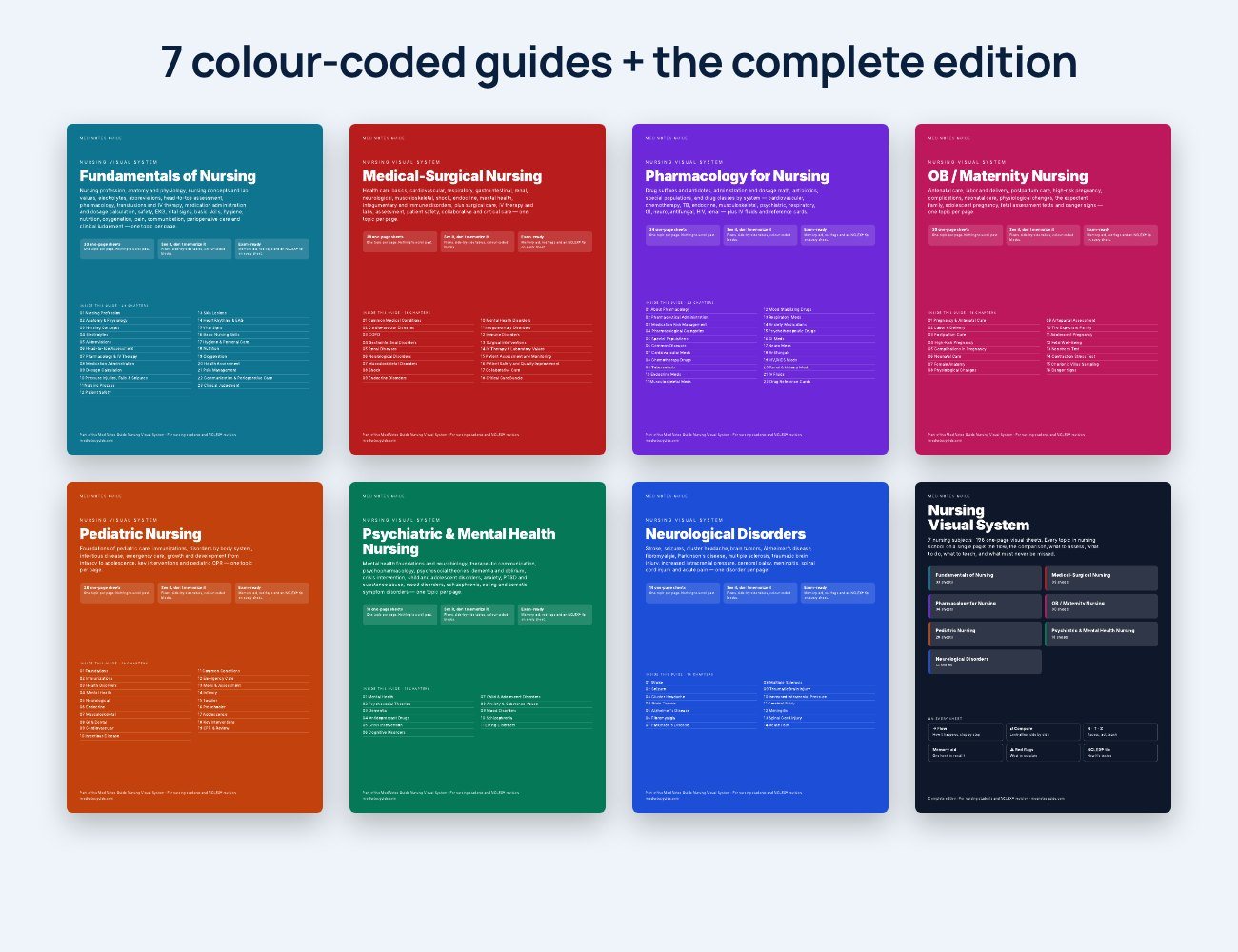
Four products, four different jobs. The notes at the bottom of each card tell you who it's for, so you buy the right one the first time.

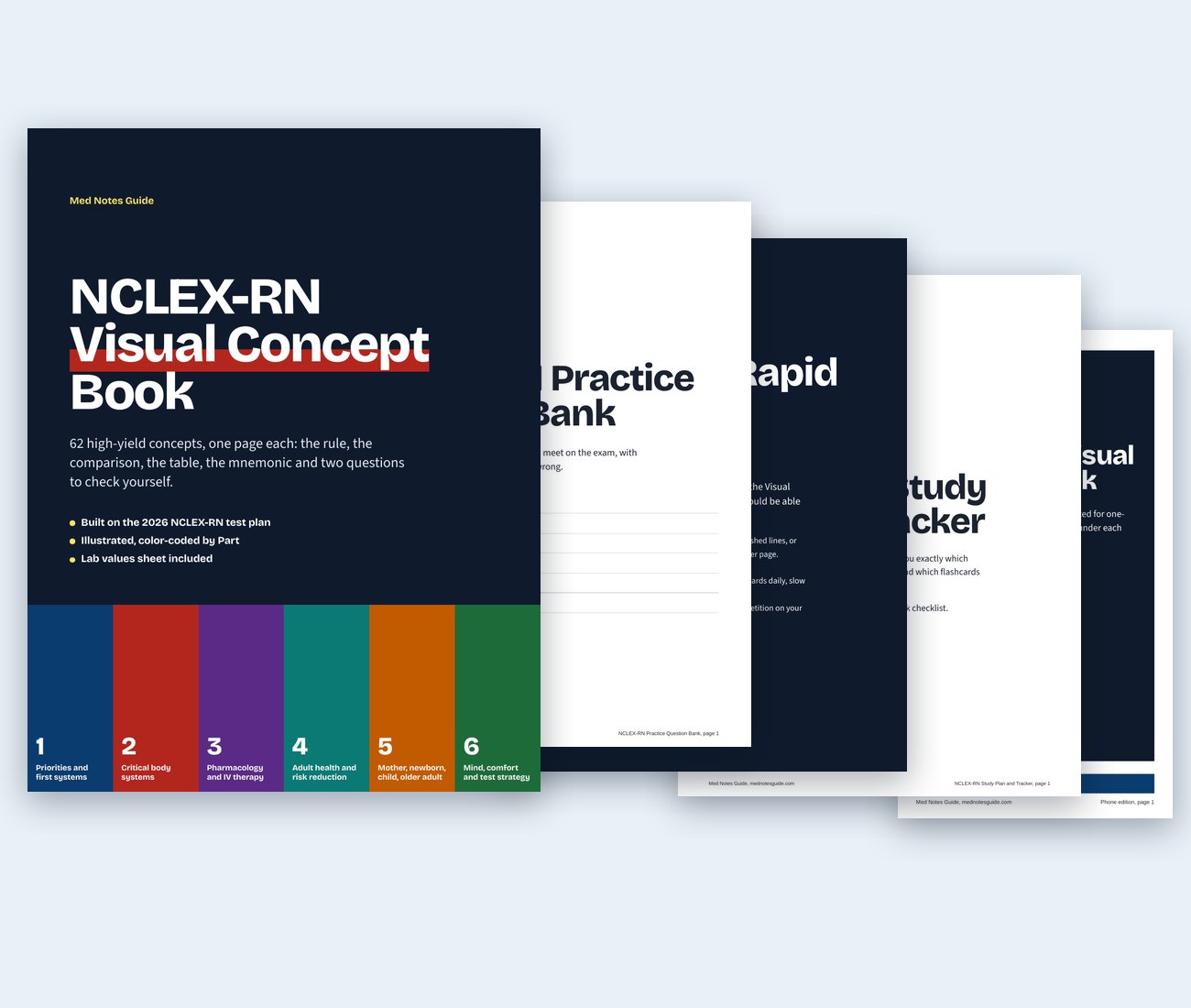
62 one-page concept sheets and a lab values sheet, a 350-question bank that explains why every wrong option is wrong, 420 flashcards (printable, Anki and CSV), and a plan for 8, 6 or 4 weeks out with a tracker.
For you if your test date is set and you want one plan to follow instead of a $200-a-month subscription you'll forget to cancel. Not for first-semester students; start with the Visual System below.

196 one-page sheets across Fundamentals, Med-Surg, Pharmacology, OB, Peds, Psych and Neuro. Every care plan topic, drawn.
For you if you're in the program now and your exams are coming from lecture content. This is the one most students should start with.

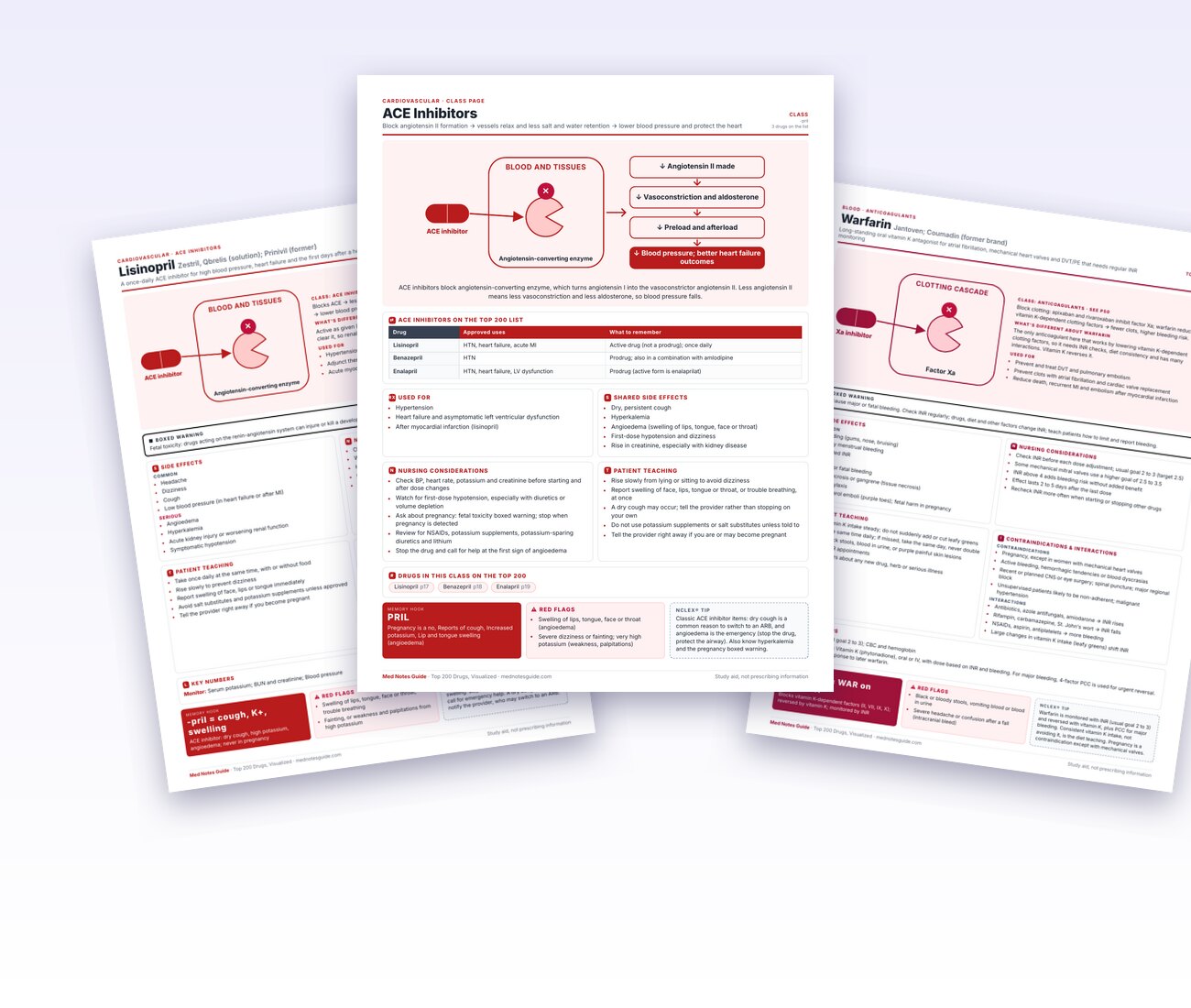
The 200 drugs you'll be asked about, one page each, plus 44 class pages that show the mechanism as a picture. Phone, self-test and color-in editions, 1,472 flashcards and an A-Z finder.
For you if pharm is the class that's dragging your GPA. Learn the 44 classes and the 200 drugs fall into place.

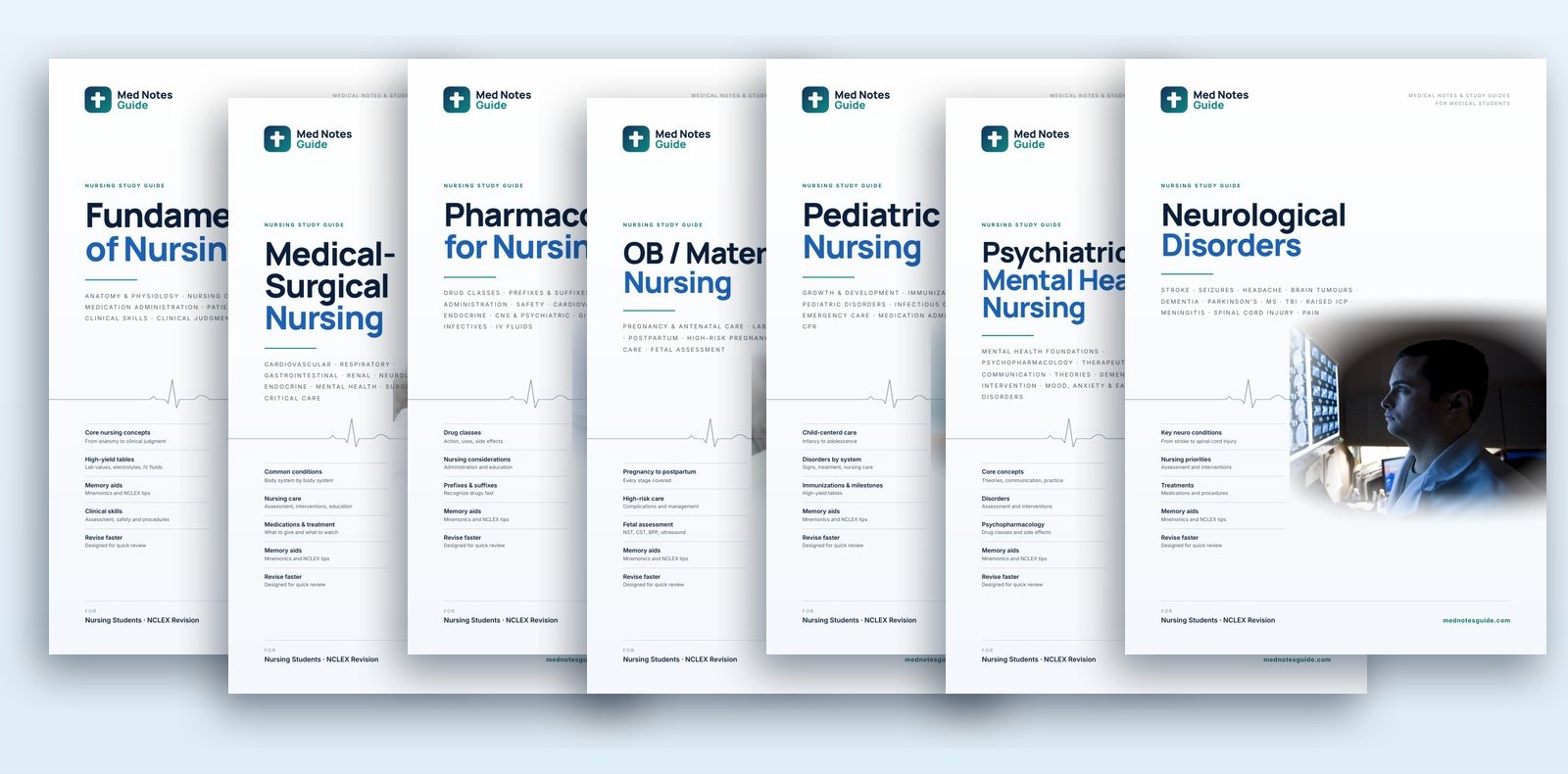
123 chapters and 967 pages across the 7 core subjects, with tables and diagrams. The long-form version of the Visual System.
For you if you want the full explanation behind each topic, not only the one-page summary. Many students buy this and the Visual System together.
School taught you the 400-page version. The Clinic-Ready Library is the version you can read between the door and the exam table.

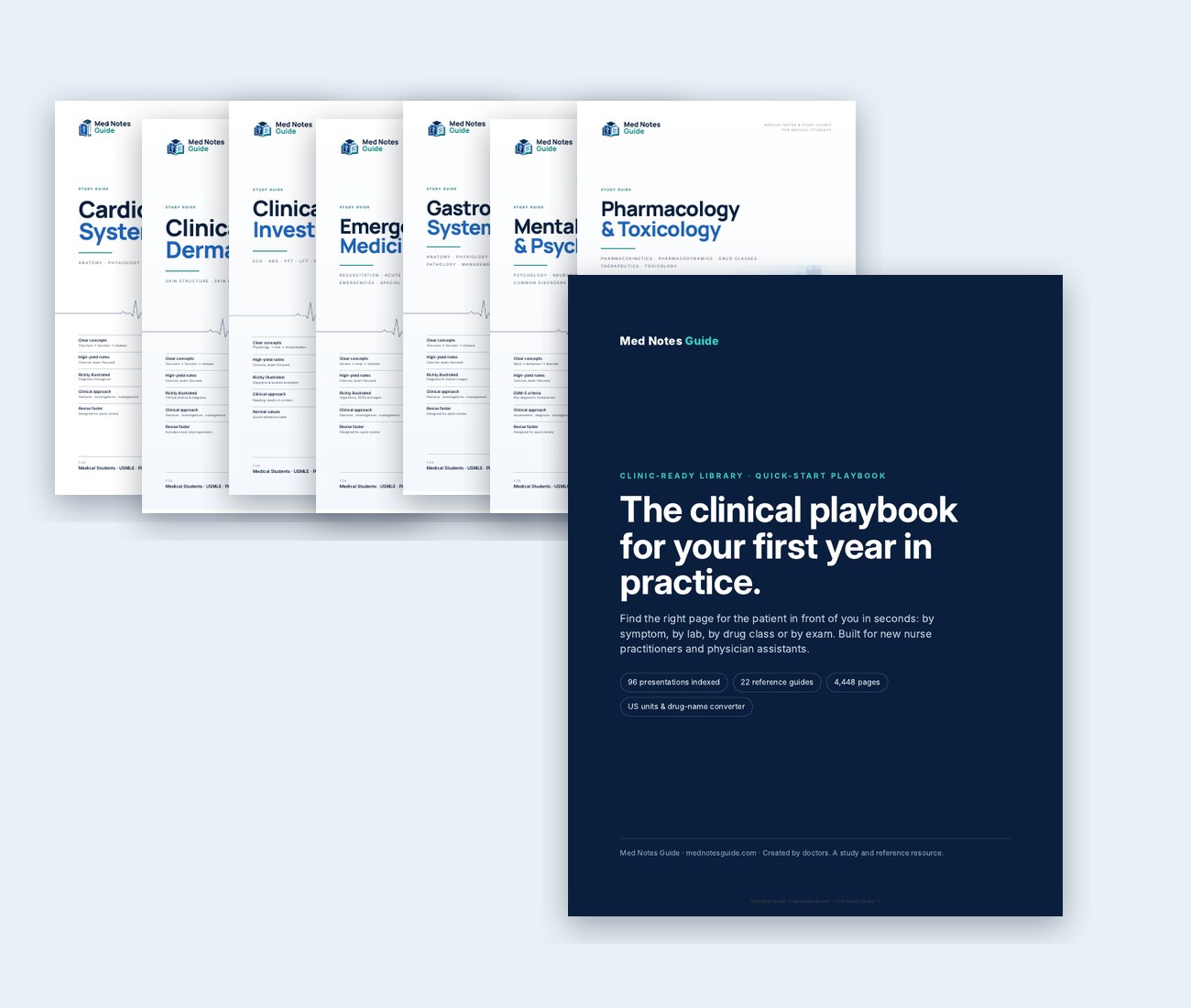
A Quick-Start Playbook that takes 96 common presentations, labs, drug classes and exams and points you to the exact page. Behind it: the Top 20 Presentations pocket guide, 21 one-page summary sheets, 21 full reference guides (4,350+ pages), an ABG handbook, a 3,400-question self-check bank with answer keys, and a converter for US lab units and drug names.
For you if you've just started seeing patients on your own and the gap between "I learned this" and "I can act on this right now" is stressing you out. Study and reference material, not medical advice.
Special tests, post-op protocols, gait, neuro, cardiopulm. Drawn so you can picture the test on the patient, not recite a list.

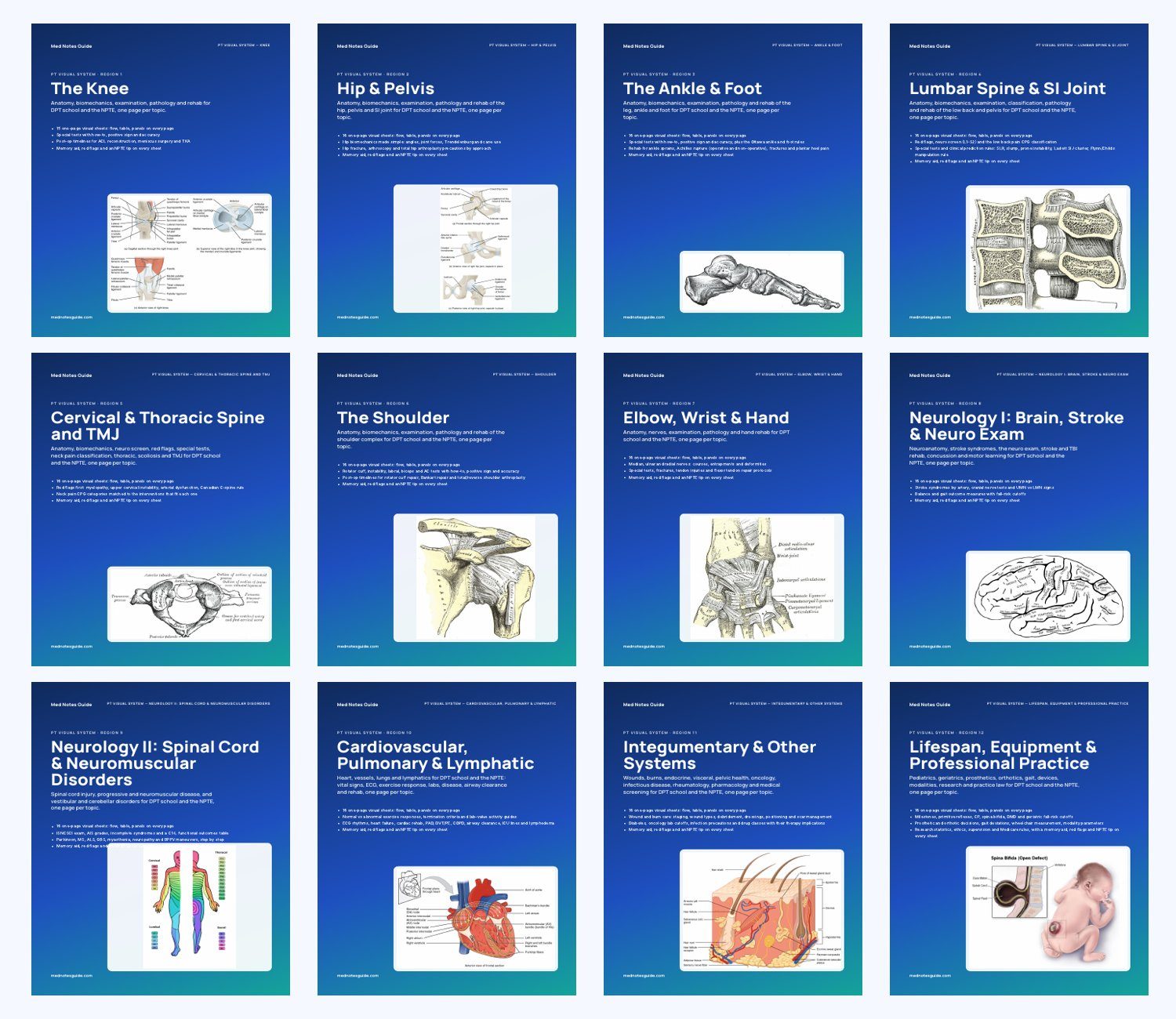
191 one-page visual study sheets across 12 regions and systems, a phone edition sized for a screen, a self-test edition with the answers hidden, 3,558 flashcards and an A-Z finder so you can look up a test by name.
For you if you're in a DPT or PTA program or your NPTE date is set. Independent study aid, not affiliated with the FSBPT.
Twelve subjects, one format, and a map of what the exam actually tests so you don't spend a week on the wrong chapter.
12 dental study guides covering 147 chapters, 24 one-page INBDE cheat sheets for the final week, the INBDE Exam Map that shows how the test is weighted, and an 8-week study plan.
For you if the INBDE is this year and you want one library instead of six borrowed PDFs. Not affiliated with the ADA or the JCNDE.
21 guides, system by system, from cell biology to the OSCE. This is where Med Notes Guide started.

All 21 study guides, 15 practice exam booklets with answer keys, the ABG Interpretation Handbook and a 12-week study plan with a tracker and an error log.
For you if you want to read and then test yourself in the same place. The practice booklets are the reason to pick this over the guides alone.

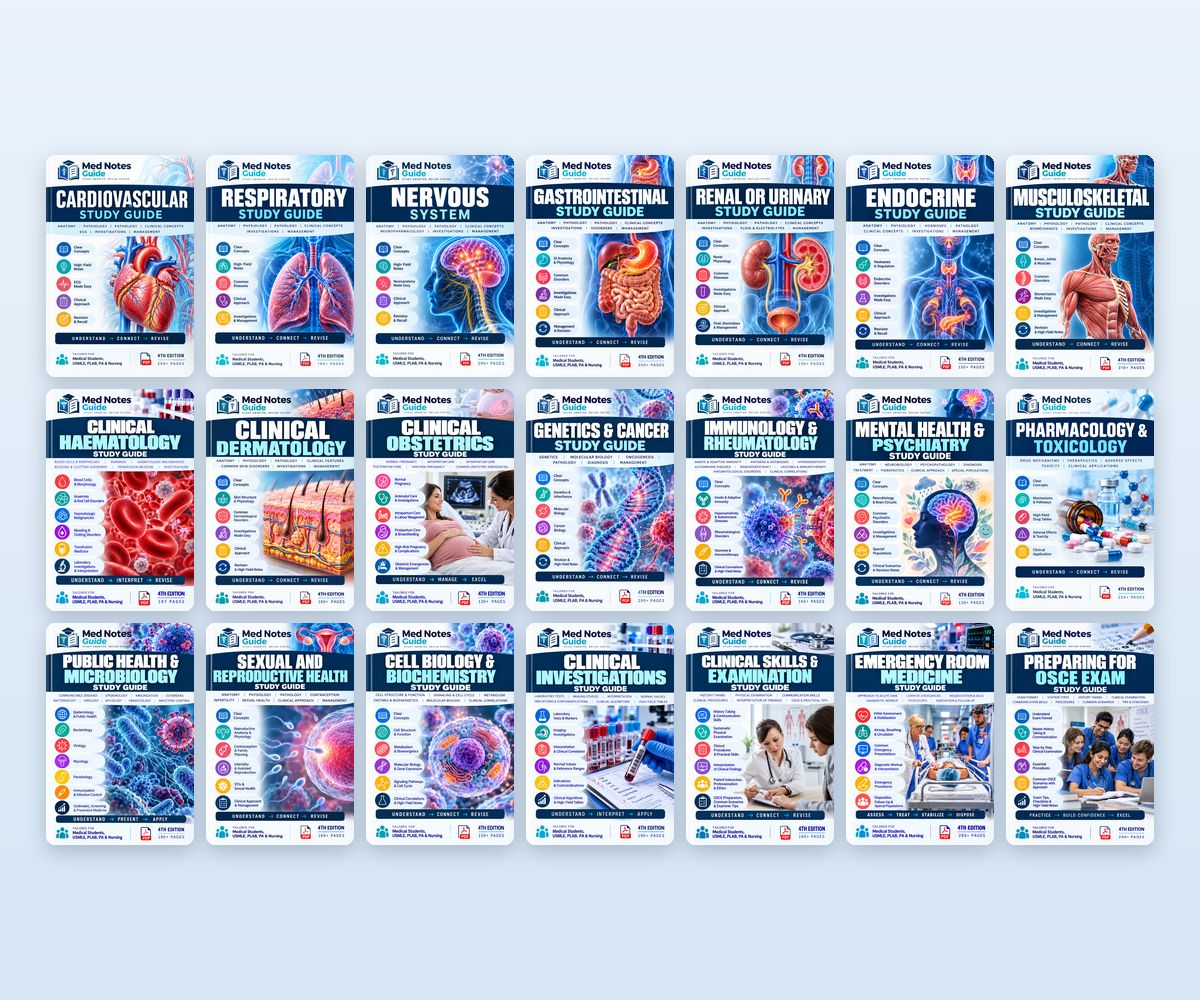
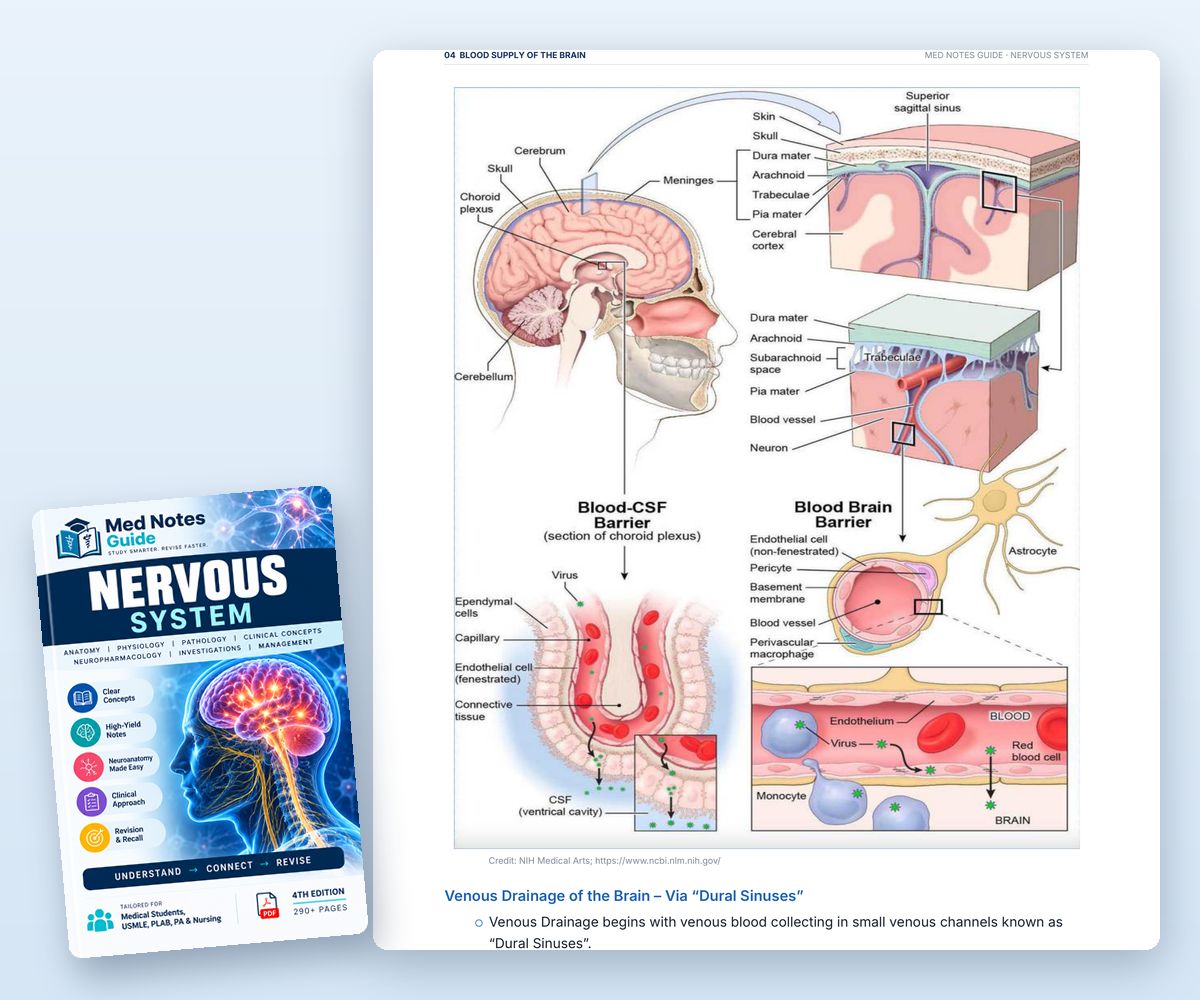
479 chapters and 4,200+ pages: cardiovascular, respiratory, renal, GI, endocrine, neuro, MSK, pharmacology, microbiology, haematology, dermatology, obstetrics, psychiatry, clinical skills, emergency medicine, OSCE prep and more.
For you if you already have a question bank you like and just want clear notes to revise from. Written to international conventions, with SI units and some British spelling.
Email support@mednotesguide.com within 7 days of buying and we refund you in full. No form, no reason required. We'd rather you tell us what didn't work than keep a product you won't open.
The Nursing Visual System ($39). It covers the seven subjects your lecture exams come from. Add Top 200 Drugs if pharmacology is the problem class. Buy the NCLEX-RN Study System when your test date is set.
An email within a few minutes with a link to download your files. They're PDFs you can open on a phone, tablet or laptop, print, or mark up in an app. Products that include flashcards also give you Anki and CSV files.
No. You pay once, in US dollars, and the files are yours. Nothing renews.
Doctors. Each guide is organized the way clinicians think about a topic: structure, then function, then what goes wrong, then what you do about it.
They'll help you understand and remember the material, which is most of the battle. No study resource can promise a result, and we don't. Pair them with practice questions and your course content.
They're written by doctors to international conventions, so you'll see SI units and some British spelling alongside US drug names. The science is the same. For US-specific guidelines, follow your school's resources.
7 days, full refund, email us. Details in the Refund & Cancellation Policy.
Pick your program, pay once, and have the files on your phone before you've finished your coffee.
Find your study materials