Why nursing students keep re-learning the same topics before every exam
And the simple 3-step revision method that fixes it, whether you're preparing for semester exams, university exams or a licensing exam.
If you're a nursing student, this probably sounds familiar.
You studied heart failure last month. You made notes. You understood it. Then the exam timetable comes out, you open your notes… and it feels like you're starting from zero again.
So you go back to the textbook. Then the lecture slides. Then a YouTube video. Then that PDF someone shared in the class WhatsApp group. Two hours later, you've rebuilt one topic, and there are forty more to go.
The problem usually isn't that you didn't study. It's that what you studied is scattered across too many places.
The hidden cost of scattered notes
Nursing asks you to hold an enormous amount at once: drug classes and their side effects, normal lab values, head-to-toe assessment, care priorities, the stages of labour, developmental milestones, mental health interventions.
When that information lives in five different places, every revision session starts with the same job:
- Finding where you wrote it down
- Working out which version is right
- Piecing the topic back together before you can actually revise it
That's why revision feels slow, and why topics you "already knew" disappear by exam day. You're spending your energy re-organising instead of remembering.
The 3-step fix
Students who revise efficiently tend to do three simple things. None of them need extra hours.
Pick one organised set of notes for each subject and make it your home base. Everything else (lectures, textbooks, videos) feeds into it, but revision always starts in the same place.
Before re-reading whole chapters, scan the summary tables and key points: normal values, drug suffixes, priorities. Then test yourself. Cover the table, say it out loud, check. Ten minutes of recall beats an hour of re-reading.
Revisit each topic after a day, then a week, then before the exam. Short, spaced reviews stick far better than one long cram session, and they're easy to fit around clinical postings.
The catch is step one. Most students don't have one organised source per subject. Building it yourself, across Fundamentals, Med-Surg, Pharmacology, OB, Pediatrics, Psych and Neuro, can take a whole semester.
A shortcut for step one
That's exactly why we made the Med Notes Guide Nursing Bundle: seven structured study guides covering the core of nursing, all in the same clean format, so every subject has one clear place to revise from.
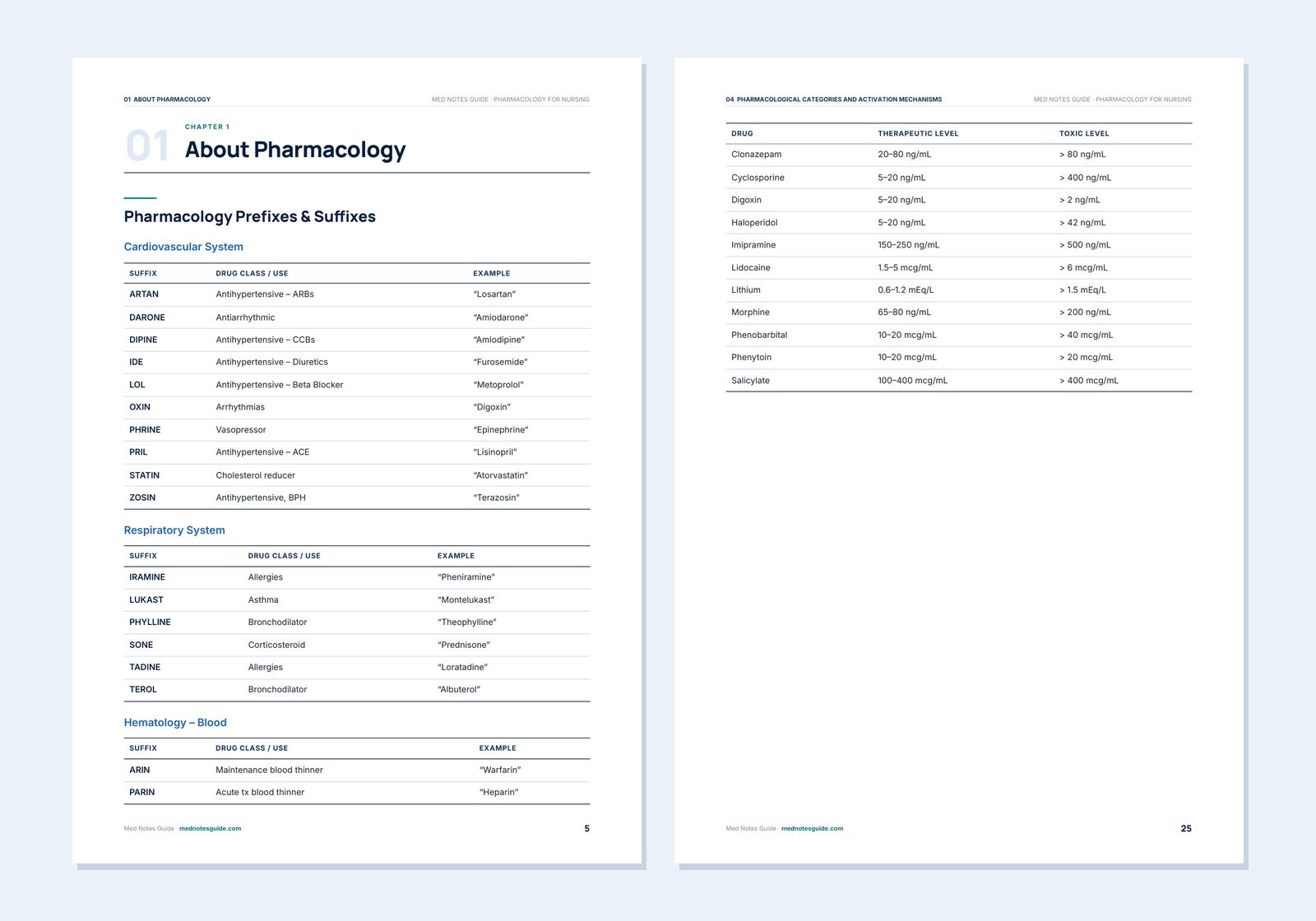
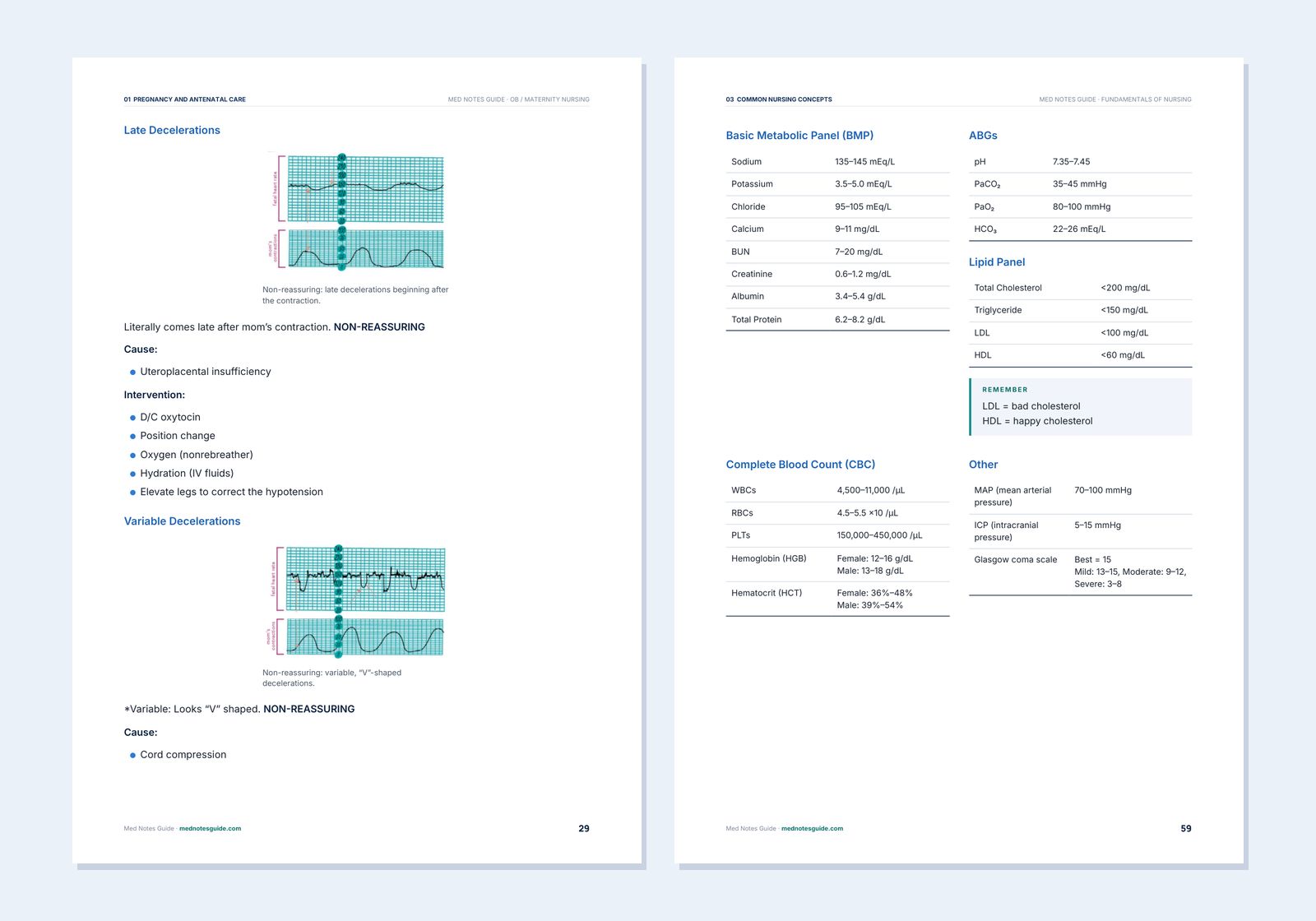
Each guide is built for exactly the kind of revision above: tables you can scan, key-point boxes you can test yourself on, labelled diagrams and clinical images, and a contents page so you can jump straight to the topic.
One organised library for your core nursing subjects
- Fundamentals of Nursing
- Medical-Surgical Nursing
- Pharmacology for Nursing
- OB / Maternity Nursing
- Pediatric Nursing
- Psychiatric & Mental Health Nursing
- Neurological Disorders
123 chapters · 960+ pages · PDF on your phone, tablet or laptop · one-time payment of ₹999 for all seven.
Download links emailed instantly after payment
The bottom line
You don't need more material. You need what you already study to live in one organised place, so revision is about remembering, not searching.
Whether you build that library yourself or start with ours, the three steps above will make your next exam season calmer.
Take a look inside the Nursing Bundle →
P.S. The guides are a revision resource, not a replacement for your textbooks, lectures or clinical training. Use them alongside your course, and always follow your institution's protocols.